John Savage's will
Why Didn't They Ask EvansJohn Savage's will is both a legally witnessed testament and the focal point of a developing identity fraud. It appears to have been made during Savage's distress over what he believed was a terminal illness, shortly before his death by an overdose of chloral. Its unusually large bequest to Mrs Templeton seems difficult to contest under ordinary legal arguments; later, Frankie Derwent proposes that the apparent signing was not what it seemed, because Roger Bassington-ffrench may have signed while impersonating Savage.
Making the Will
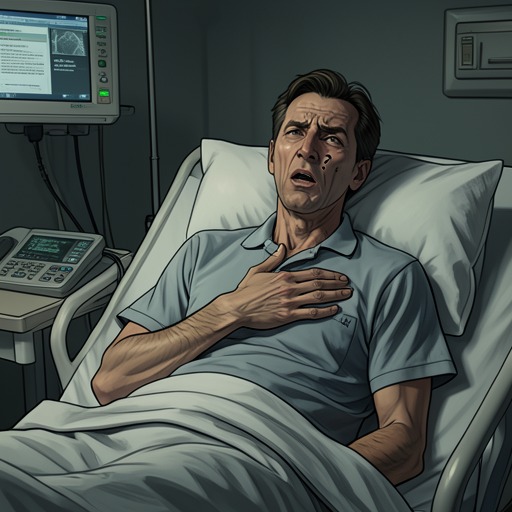
As the circumstances are explained to Frankie, Savage returned to Chipping Somerton deeply distressed by the prospect of a painful, lingering death. He believed he had cancer, and the suffering of family members who had died of the disease made him determined not to endure the same fate. The account describes a doctor whose manner and discussion of treatment may have intensified Savage's alarm, even while offering reassurance about cancer. The exact medical exchange is not established here; what matters to the will's reported background is Savage's conviction that death would be prolonged and painful.
In that state, Savage summoned a solicitor and had the will drawn up at once. The solicitor reportedly wanted to leave and prepare it more fully, but Savage insisted on completing it then and there. A servant and the gardener witnessed the document, after which the solicitor took it away for safekeeping. That direct encounter would later become the main obstacle to a simple forgery explanation: the solicitor maintained that Savage himself had insisted on making the will and had signed it in his presence.
That evening, Savage took a large overdose of chloral and left a letter explaining that he preferred a quick death to a long and painful one. The will and the death therefore initially appeared to belong to a single, comprehensible sequence: fear of a terminal illness, an urgent testamentary decision, and suicide. The document's formal preparation and safekeeping gave that account the appearance of procedural reliability.
Bequests and the Legal Challenge
The will gave £700,000, free of legacy duty, to Mrs Templeton and left the remainder of Savage's estate to specified charities. The intended challengers were distant cousins who seldom saw him and lived in Australia. They had neither a close personal relationship with Savage nor, according to Mr Spragge's account, the means to undertake an expensive legal fight.
Spragge, who had advised Alan Carstairs about the will, said he had found little practical basis for contesting it. A jury had returned the sympathetic verdict of suicide while of unsound mind, but that verdict did not establish that Savage lacked capacity when he made the will. The solicitor who witnessed the signing considered him sane and in possession of his senses. Nor did Spragge think undue influence could be proved merely from the disposition: Savage had not disinherited anyone near and dear to him, since his only relatives were distant cousins whom he seldom saw. Spragge's advice was consequently that a court action offered no dependable prospect of success, especially given its likely cost.
The will's legal strength thus rests on the same features that later make the case troubling. It was made urgently, but in front of a solicitor; it was witnessed and retained for safekeeping; and the beneficiaries' relatives appeared too remote to mount an effective challenge. Those circumstances made the document look difficult to attack without first questioning who had actually appeared before the solicitor.
From Forgery to Impersonation
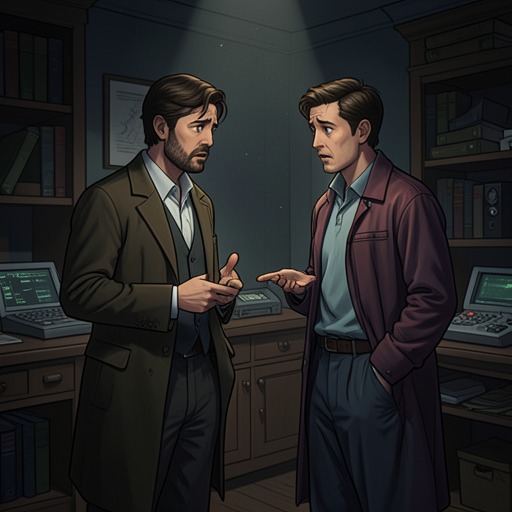
Frankie tests the possibility that the will was simply forged by speaking with Mr Elford, the solicitor who drew it up. She pretends that she has met Savage's relatives and that they suspect forgery. Elford rejects the allegation. He had seen Savage himself, he says, and Savage insisted that the will be written immediately rather than prepared later in the solicitor's usual, more elaborate fashion. The servant and gardener were brought in as witnesses, and Elford took the completed document away. This account persuades Frankie that a conventional forgery would be hard to reconcile with the solicitor's personal recollection.
The rejection of forgery does not end the inquiry; it changes its question. Frankie recalls that a house-parlourmaid would ordinarily wait on residents and see them, unlike a cook who might rarely encounter them. She infers that Gladys Evans could not have witnessed the will if she would have recognized that the person signing was not Savage. From that clue, Frankie proposes that Roger Bassington-ffrench impersonated Savage in front of the solicitor and witnesses. In her reconstruction, the real Savage arrived as well, but was drugged and concealed—perhaps in the attic—while the impersonation took place. He was then returned to bed and given chloral, and Evans found him dead the following morning.
This remains a theory at the point the evidence presents it, not a demonstrated account. Frankie herself is unsure whether they can prove it. She considers asking Rose Chudleigh, who had witnessed the will, whether she could identify the signer as someone other than the real Savage, but doubts Rose would be a reliable witness. An examination by a handwriting expert might expose a forged signature, she suggests, although nobody had previously raised the question because the will seemed impossible to forge under the known circumstances. The distinction is crucial: the document may bear a forged signature even if the solicitor truthfully recalls witnessing a signing, because Frankie suspects that the signer assumed Savage's identity.
Role in the Investigation
The will links Savage's death to the later investigation of Alan Carstairs and Roger Bassington-ffrench. Carstairs had consulted Spragge about Savage's testament, and Frankie learns from Spragge that the legal advice had been to abandon a costly challenge. When Elford's testimony appears to close off ordinary forgery, Frankie uses a practical detail about household service to reopen the case on a different premise: the possibility of an impostor witnessed by people unable to recognize him.
As a result, the will shifts from apparently secure evidence of Savage's final wishes into a puzzle about recognition, presence, and the limits of testimony. Its witnesses may have seen a signing without being able to establish the signer's identity. The evidence supplied here leaves the proposed impersonation unconfirmed, but the will's role in the mystery is decisive: its formal validity conceals the possibility that the person whose wishes it records was never the person who signed it.